Describing the Indescribable

Quakers have many words for the divine: God, spirit, Goddess, light, life, good. Describing what we feel connected to in our Quaker meetings is not easy

Quakers have many words for the divine: God, spirit, Goddess, light, life, good. Describing what we feel connected to in our Quaker meetings is not easy – in my case it doesn’t fit any of the descriptions of the divine that I heard as a child, nor many that I have heard as an adult. Nonetheless, I use the word God. I understand the spirit behind all of the words that are used. The words do not define the experience we have, they only describe it or point to it. 

I know that some Friends do not want to hear some of these words used. There are those who do not want to hear the word God, for example. Others insist on Christian language.

Many years ago, as a professor of psychology, I used to teach my students about Maslow, Freud, Skinner, Tinbergen, Pavlov, Erikson, Jung, and others. Each of these theorists brought a unique point of view to their understanding of human behavior. My students used to ask which of these theories is correct. The answer is that they are all correct, but they are incomplete. They all result from the discipline and thought of the formulator who was looking at human behavior (visible and invisible, exterior and interior) through their own unique lens. Each brought a part of the truth. The more views we have, the better we understand the subject. 

I think it’s like that with Quakers describing the connection that we feel in Meeting for Worship I have no traditional Quaker words for the deep connection that I feel to something that I cannot describe. The closest I can come is to use the words I was taught as a child – the God words. But others have other points of reference, other lenses through which to view and describe this experience that unifies us as Quakers. Sometimes the words others use may trigger old memories or feelings in us – but that’s for us to manage. I believe that we can give the person using those words the grace of letting them use the words that they feel comfortable with and ask for that same grace for ourselves. We none of us have words that can absolutely, correctly, completely capture the power of that connection. 

I love the fact that Quakerism is large enough to hold all of our various diverse experiences in Meeting for Worship as well as all of the various diverse backgrounds that we bring to it.  I love that Quakerism is large enough to encapsulate all the ways in which we worship. Large enough for the conservative Friends who embrace plain dress and plain speech, for those Friends whose pastors program their worship sessions, for those of us in the calm stillness of unprogrammed worship, and even for the joyous, lively singing and dancing in worship among our Evangelical Friends. 

I hope that this can extend to embracing the many and wonderful ways in which we describe whatever it is that we engage with in Meeting for Worship. Words automatically limit what we describe, and these words can only point to something bigger than all of them. No description of our experience is perfect. It is at best an approximation, incomplete. 

Until we have new words, we are limited to the old ones in trying to describe the indescribable. All of these words are correct, but they are incomplete.

Each of us has a particular experience of God and each must find the way to be true to it. When words are strange or disturbing to you, try to sense where they come from and what has nourished the lives of others. (Quaker Faith and Practice of Britain Yearly Meeting – Advices and Queries #17)

Photo credit to Pixabay
That of God in everyone

Sometimes we find ourselves looking at the problems in today’s world and asking: Where is God in this? 

Sometimes we find ourselves looking at the problems in today’s world and asking: Where is God in this? 

As Quakers we say that we believe that there is That of God in everyone. But when we look around, is that really what we see? 

Do we see God when we look at the Friend who annoys us in Meeting for Worship; or the neighbor whose dog destroyed our peonies; or the child having a meltdown in the candy aisle of the supermarket; or the bus driver who leaves the bus stop just as we get there; or the homeless person on the street shouting at someone we can’t see; or the migrant sleeping in the park; or the police officer who takes that migrant’s belongings when they are absent; or the football hooligan throwing bottles; the capitalist investing in polluting energy; or the soldier who is fighting a dirty war?

When we look at all of these, can we see God there? If not, there is work to do. God is all around us. If sometimes God is hard to see maybe the problem is with our own vision.

We do well to remember that when we “other” a fellow human being, when we put a barrier between “us” and “them”, God is on the other side of that barrier, in the other person. So if God feels far away sometimes, who moved? 

Look around you. God is there. 

Photo by Daniel Frese on Pexels


A Simple Faith in a Complicated World

News!

Oh, wow. I’ve written a book! And now it has a publication date: 28 July 2023. That’s a long way off, but it will be available for pre-order before that, and a few review copies can be had even before that. If you’d like to write a review, please let me know and we’ll see if we can snag one of those.

Watch this space!

A Blessing

.

This was written by my Friend Mig Kerr as blessing for companions on a course entitled “Nurturing our Spiritual Lives through Spiritual Direction” She has allowed me to publish it here.

March 2021

may our days be spacious
and our nights full of dreams;
may we reach daily into the well of wisdom 
deep within

may we become aware of promptings
and bring them into the Light,
where they can unfold
and show their path

may we have companions to ride the waves with us,
even when the shore is far away;
to explore the depths with us;
to hold us in the dark:
to remind us that the stars are shining
even if we cannot see them,
to draw our eyes to the little points of light
barely visible

may we be companions to others,
walking alongside in love,
sensitive to the movings of the spirit
within and between us,
listening with the ears of our hearts

Mig Kerr

This place where you are right now

This place where you are right now

God circled on a map for you

Wherever your eyes and arms and heart can move

Against the earth and the sky, the beloved has bowed there –

The beloved has bowed there knowing

You were coming.

(controversially attributed to Hafiz)

Quaker Roots

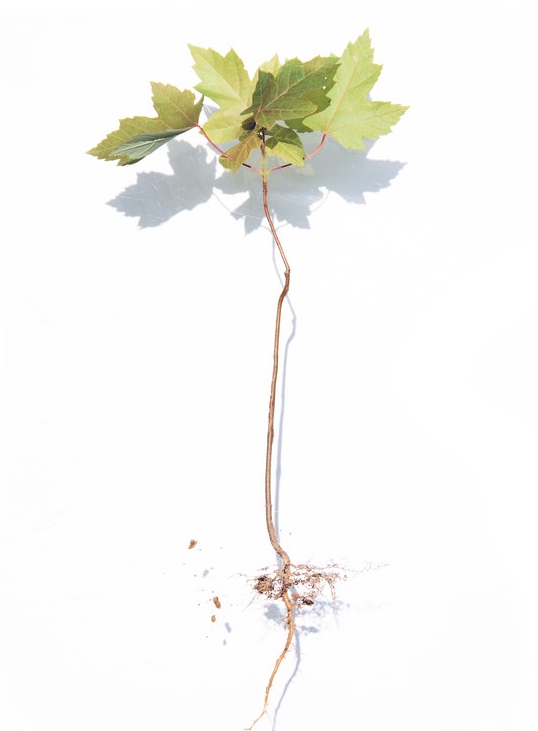
Our roots nourish us and hold us steady. But we are not our roots — we grow beyond them into something different, something new.

The Religious Society of Friends is rooted in Christianity and has always found inspiration in the life and teachings of Jesus. How do you interpret your faith in the light of this heritage? How does Jesus speak to you today? Are you following Jesus’ example of love in action? Are you learning from his life the reality and cost of obedience to God? How does his relationship with God challenge and inspire you? Advices and Queries 4, BYM Quaker Faith and Practice

We are taught that Quakerism is rooted in Christianity, but without much explanation of what that means. In the same way that early Christianity was rooted in Judaism, we are rooted in Christianity. It is our spiritual culture, the ground from which we grew, the language and concepts we use to describe our direct experiences with God. 

Our roots nourish us and hold us steady, but we are not our roots. Rather, we grow beyond them. In the same way that early Christians grew from their Jewish roots into something different, Quakers take their Christian roots and grow into something different, which fits our experience with God. 

Jesus was rooted in his family, in his culture and in his religion.  They informed every aspect of his life. But he was not only that culture – he went beyond it. He even rejected large parts of it. 

I can’t claim to be a student of the Bible, but I’m pretty sure that Jesus never said, “pick up your cross and worship me”. I think what he said was “…follow me”. Do what I do: tend the sick, feed the hungry, welcome the stranger.” I believe that the Quaker form of worship helps us to connect to our roots and then go beyond them to “let our lives speak”; to work for the world we want to see. 

Ghandi is often quoted as saying, “I like your Christ, I do not like your Christians. Your Christians are so unlike your Christ.” Quakerism began as a return to early Christianity, to the work of Jesus. In many ways, Quakers continue to do this, to respond to Jesus rather than to the Christ. To follow the one who said that we need to “love one another”, rather than the one who is represented in many modern Christian churches. 

I often think about Jesus – the man, not the Christ. I wonder, for example, what kind of accent did he have and what did that accent say about him? How did he part his hair? What did he call his mom? We hear he was a carpenter—was there one piece he created that he was particularly proud of? Did he like his work? What did he say when he smashed his thumb with a hammer? What was his favorite color? His favorite meal? His favorite swear word? Could he swim? There is so much we do not know about this man and about the things that formed him to be the one we still talk about 2000 years after his death. 

One of the things that first attracted me to Quakers is the notion that revelation didn’t stop 2000 years ago. It continues today, as Friends wait in anticipation for divine inspiration and then share their ministry with each other and with the world. 

What does this mean, then? The mystical nature of Quakerism means that my experience may not be yours. However, I believe that the roots of Quakerism are not in the steeplehouses and the hierarchies of Christianity. I believe that those roots are in the man who taught us to love one another. It’s that simple and that difficult. 

Photo by Evie Shaffer from Pexels