On Living

Come back when you have reflected on your faith and can speak to what it has meant to you as you traveled the path.

(This was written by my stepdaughter, Theresa Flynn)

Many many deep thoughts today. The time of year when people come to my door, cheery and fresh-faced, urging me to accept their particular version of religion.

I don’t dislike them for their proselytization. But I take exception with their youth. Here’s the thing. In many places of the world those who have lived a certain number of years are respected for their lived experience. America is somewhat unique in its adulation of youth. 

I know there are people who tell these young folk of faith to “have sex” before they speak on life choices. That’s crude and crass, but it’s not entirely wrong. Sex is part of love and love is something impossible to describe to someone who has never loved and is also unique to each person’s experience.

Here is what I would say to these missionaries, if I could: 

Come back to me when you have lived. Come back when you have loved in a way that has ripped you in two. When you have lost love, when you have despaired, unable to see the light. Come back when you have lived a life – something which never turns out the way you think it will and brings surprises beyond imagining. Come back when you have experienced struggle and heart-wrenching ache, when you have been gifted by joy you never saw coming. Come back when you are old. And you sit in a chair watching dawn on a cold December day, drinking tea, reflecting on your life. It wasn’t what you expected – was it what you wanted? Was it fulfilling? Can you look back with the confidence that it is a life well-lived? Come back when you are old enough to know that there are many things you can still do, but there are no longer limitless possibilities for the direction of your life. Come back when you have reflected on your faith and can speak to what it has meant to you as you traveled the path.

Yesterday was a day when my second cousin, a boy of 19 and a new father, was memorialized. It is an unimaginable loss which will forever touch the lives of those he left behind. As a part of the grief, of losing who he was, is the loss of possibility. We live our lives in the possibility of what may come. For him, all that “could be” is gone. What of his daughter? She will never know him. What will he be to her? A photo? A story? A regret? A loss? Will he be a ghost who only sometimes haunts the corners of her life, someone she doesn’t think about much … until she turns 20 and realizes her father never saw that age. How will her mother, her grandfather, all of his family, deal with this loss? Does the grief weave its way into their lives in quiet ways, or rip a jagged hole which never fades?

This is what I mean. That life is unpredictable. A person is there. And then they are not. You live a long life and wonder what it all means. Why is one person given grace and another struggle? A set of beliefs which brings structure and peace and solace to one person rings hollow to another. We do not know, and will never know, what tomorrow will bring. 

To the young people who want me to buy into their faith, I say – strap in. This is life. And you have none of the control you think you do. The most you can hope for is to be part of the ride.
The Grace of Love

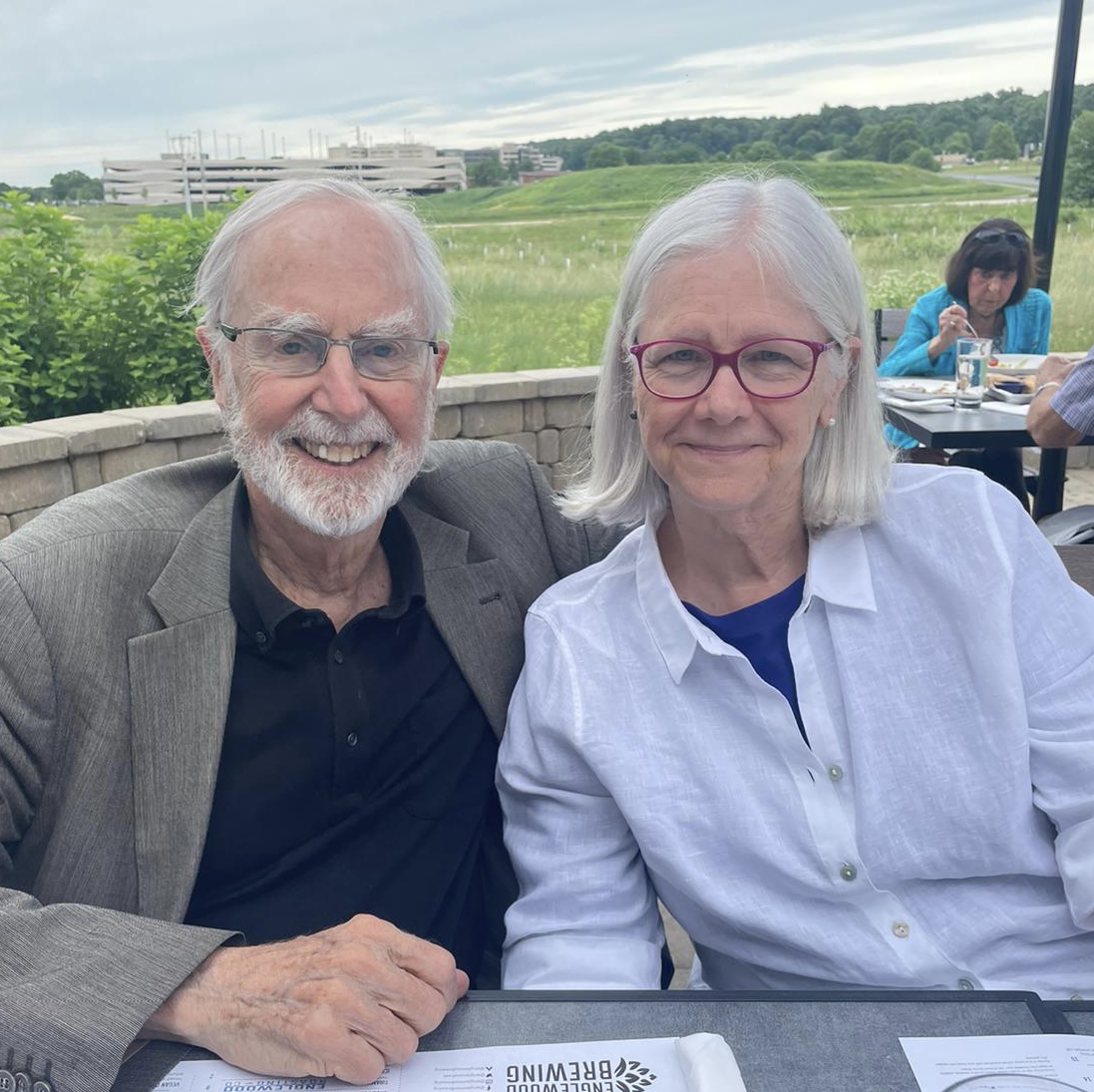
I have lived for 34 years in the grace of my husband’s love. It’s unconditional but it still took me a long time to count on it. I believe that my husband has always loved me – not always my actions, but always ME. I don’t have to change to have that love, but having that love makes me want to change, to do better, to be my best self. 

My husband Dan was the first person I had ever known who loved me with all my faults. Not in spite of my them, not because of my them, but simply with them. Just as I am. Or as I was. As I have been over these many years, because during 34 years of living in the grace of that love I have been able to change and let go of patterns of behavior that don’t serve me or others. 

That love stands as a mirror, reflecting back to me the best of me and because of that I have become a better person. I count on that love, never more than when I have not been my best self, and when I need the reassurance that I can find that best self again. The safe harbor of Dan’s love lets me love my worst self until I can find my best self. Or at least my better self. 

Knowing that the harbor of that love is always there I am not as afraid to confront my darker side, to examine my faults fearlessly, to understand them and what triggers them. It’s the safety of that love that enables me to accept and grow away from my darker side. It holds space for me to be broken and to heal. 

It took me a long time to see that God also loves me just as I am. I recently read of someone who was feeling burned out, oppressed by the weight of her work and the state of the world today. She decided to spend two days in a retreat and checked herself in to a retreat center, where she was assigned a spiritual advisor. She expected to be given exercises to do which would ensure her spiritual cleansing, her return to the light of the love of God. Instead, she was told to spend the two days living in the knowledge that God loves her now, apart from anything that she does.  

This is how love has changed me. First, the knowledge of my husband’s love and then the knowledge of God’s love. 

I now try to live each day in the knowledge of God’s love, in the knowledge that I don’t have to change to be worthy of that love. When I can do that, I am able to work to become the best version of me that is possible. Not to earn that love, but because of it. 

The best analogy that I can find for this is being in a boat. Not knowing that I am loved is like having leaks in my boat. If the boat is leaky I have to spend all of my time bailing the boat out (ie, trying to be lovable), and have no ability to row or steer it. My boat is at the mercy of the environment around me. When I know that I am loved the boat loses its leaks and I can spend time rowing and steering it toward where I am meant to be. 

We don’t have to change in order for God to love us. God loves us in order for us to change. Living in the knowledge of that love, with the foundation of that love, allows us to become our best selves. 

Food as love

As I examine my journey with food, love is the thread that holds it together.

Recently I saw a challenge to write our journey with food. It wasn’t directed at me and I wasn’t sure exactly what it meant, but I decided to try anyway. 

I grew up in a culture famed for its hospitality. If ‘they’ loved you, they cooked for you. If you loved ‘them’, you ate their food. So during large parts of my life food meant the outward proof of the love of others. But that love wasn’t without conditions – to act, to BE as others saw me, as others wanted me to be. 

Falling short, as we inevitably do, meant using food to comfort myself. Thus began an unhealthy relationship with food – where food represented the love that I did not find in my life for a long time. And if I loved someone I cooked for them. They did not all eat my food. 

When love entered my life, I was busy. I was working all the hours God sent and still using food as a substitute for the real thing. Slowly, over time, I was able to accept the love offered and to trust it, to count on it. 

For several years, I cooked for a series of diplomatic lunches whose discussions focused on human rights and peace. The food was different from most working lunches. It was all homemade, handmade. In designing the menus we thought about how it would be eaten: sitting down, standing while holding a plate, etc. We also thought about the mood we wanted to create with the food: not only the homey ambiance, but also the neurotransmitters that would be produced by the different ingredients. We wanted a sense of wellbeing, of goodwill that comes from endorphins or serotonin or dopamine. We used ingredients designed to produce these. 

At one of these, the participants spent three days discussing migration. We decided to feature foods that had migrated so successfully that they are now associated with their adopted homeland: potatoes and Ireland, tomatoes and Italy, tea and Britain, etc. The final lunch, the centerpiece of our migrated dishes, was something that is synonymous with the city of New Orleans: Gumbo. Gumbo, it turns out, is the word in several African languages for okra. 

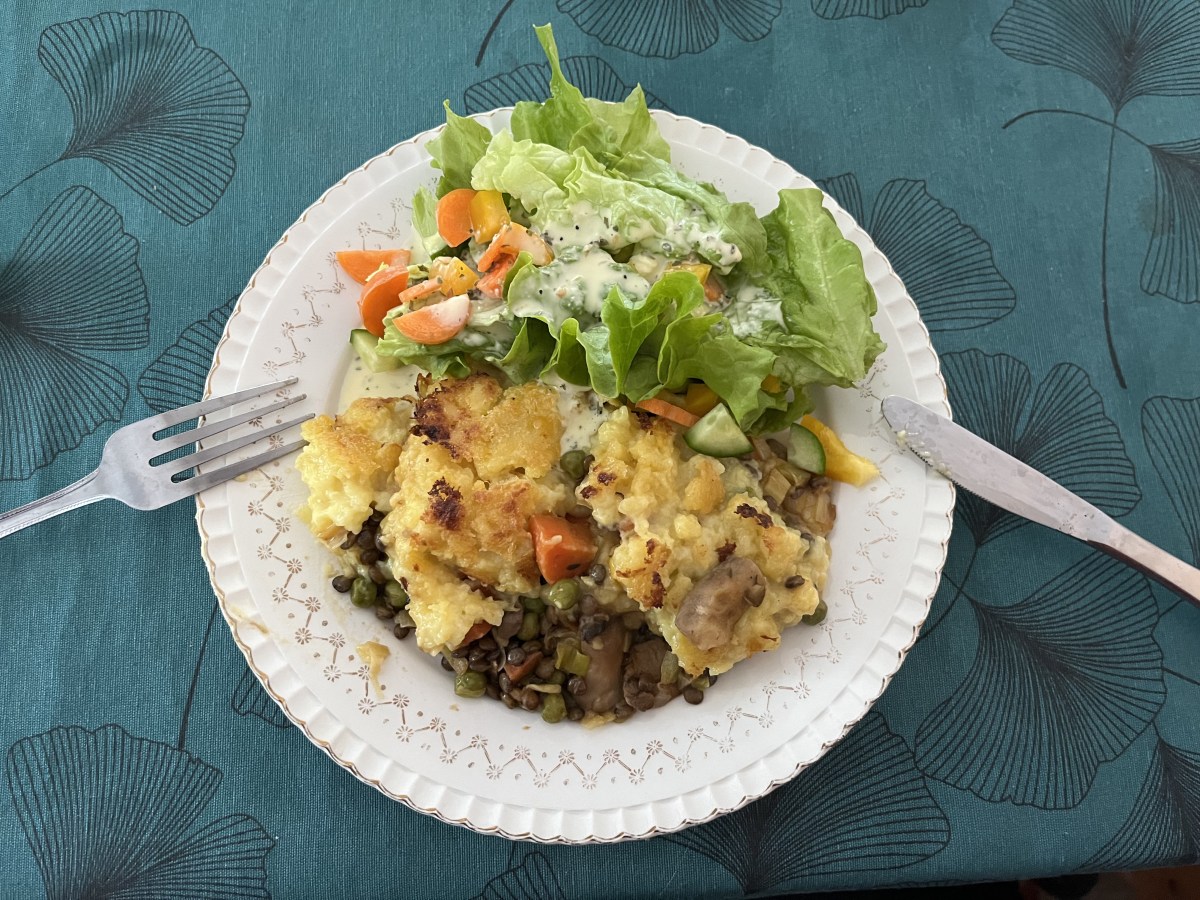
When I cook for others, I spend time building layers of flavor, using the best ingredients I can find. Sometimes a dish can take several days: a three-day gumbo is so much better than one made in an afternoon. I have been told that it’s possible to taste the love in my food. I think that’s because of the layers of flavor that are built into it. That takes time and good ingredients. Love, then, is time: time to find the ingredients, time to prepare them, time to cook them with care and (yes) with love. 

During the pandemic I cooked for people who were in the process of migrating, looking for a safe place to build their lives. This food was probably the most important that I have ever made. It needed to be nutritious, filling, and most of all, full of love. Sometimes it was all that a person might eat in a day. It needed to feed their body, but also their soul. They needed to know that someone cared enough to put love into their food.  It might have been their only food that day; it might also have been their only human contact. It had to be good. 

So as I examine my journey with food, love is the thread that holds it together. It began as an expression of love for me, then it evolved into an expression of my love for myself, and now it’s my way of showing love for others. Underneath it all is the human emotion of love, of connection. 

That of God in everyone

Sometimes we find ourselves looking at the problems in today’s world and asking: Where is God in this? 

Sometimes we find ourselves looking at the problems in today’s world and asking: Where is God in this? 

As Quakers we say that we believe that there is That of God in everyone. But when we look around, is that really what we see? 

Do we see God when we look at the Friend who annoys us in Meeting for Worship; or the neighbor whose dog destroyed our peonies; or the child having a meltdown in the candy aisle of the supermarket; or the bus driver who leaves the bus stop just as we get there; or the homeless person on the street shouting at someone we can’t see; or the migrant sleeping in the park; or the police officer who takes that migrant’s belongings when they are absent; or the football hooligan throwing bottles; the capitalist investing in polluting energy; or the soldier who is fighting a dirty war?

When we look at all of these, can we see God there? If not, there is work to do. God is all around us. If sometimes God is hard to see maybe the problem is with our own vision.

We do well to remember that when we “other” a fellow human being, when we put a barrier between “us” and “them”, God is on the other side of that barrier, in the other person. So if God feels far away sometimes, who moved? 

Look around you. God is there. 

Photo by Daniel Frese on Pexels


Today

Today’s the day

Some days make it all worthwhile. They make up for all the frustration and problems on the other days. They make us forget the pain and heartache that other days bring. Today is one of those days. 

Today. It’s a day that has been much anticipated. My friend, who had to flee her homeland and leave her children behind, has had many of the difficult days. This is not one of them.

Today. It’s a day full of trains and planes, transport questions and logistics. Today is a day that my friend thought would never come.

Today. On the difficult days, my friend talked to her children on WhatsApp. She watched them grow up and form memories that didn’t include her.

Today. As she struggled to make a place for herself in Belgium and to be able to bring her children here, she found amazing reserves of resilience and resourcefulness. But some days she doubted that today would ever come. 

Today. It’s a day that has been scheduled and postponed; it has been planned and those plans canceled. The frustration around it is immense.

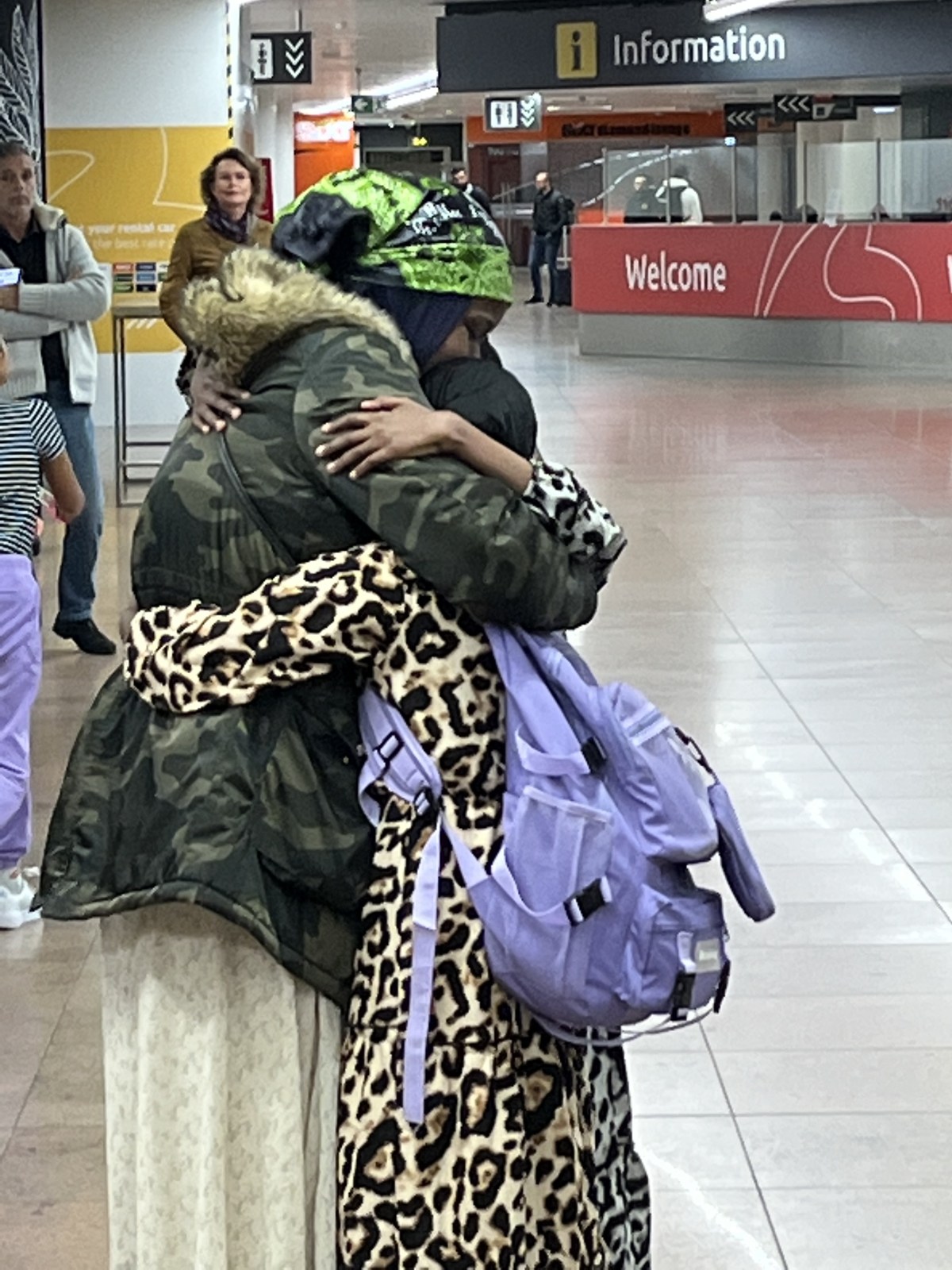
Today. It’s a day when two little girls will get to see their mother and hug her and smell her and feel her breath on their cheeks for the first time in almost half their lives.

Today. It’s a day that a mother gets to hold her children and touch them and smell them and feel their tears on her cheek for the first time in almost half their lives. 

Today. It’s the day that the girls get to tell their mom about the adventure they’ve had: airplanes, trains, automobiles, new people new languages new countries.

Today. There will be a lot of tears shed here today. That’s OK.

Today. Today is the day this miracle happens, and I get to be a witness.

Today’s the day.

A Simple Faith in a Complicated World

News!

Oh, wow. I’ve written a book! And now it has a publication date: 28 July 2023. That’s a long way off, but it will be available for pre-order before that, and a few review copies can be had even before that. If you’d like to write a review, please let me know and we’ll see if we can snag one of those.

Watch this space!

Love Our Neighbor as Ourselves

We are admonished to love our neighbors as ourselves. I have always understood this to mean that we should love our neighbors as we love ourselves

We are admonished to love our neighbors as ourselves. I have always understood this to mean that we should love our neighbors as we love ourselves. We should wish for them the same things that we have or wish or wish to have for ourselves: love, community, good health, adventure, challenging work, abundance, etc. This is hard to do sometimes, as we don’t see our neighbors as we see ourselves. We see our “insides” – all of our thoughts, wishes, fears, insufficiencies and inadequacies – but only their “outsides” – their accomplishments, the face that they turn to the world. 

And vice versa. They don’t know our vulnerabilities, our failures, our insecurities. They only see the face that we show the world, the face we don to protect ourselves. I wonder how we would react to the “us” that others see? So Robert Burns writes “oh, the gift that God would give us to see ourselves as others see us.” Or to love ourselves as others love us. Because sometimes we find another person who seems able to penetrate our defenses, to see through the walls we use to protect ourselves. Someone wo can see beyond the face that we turn to the world and see right into our wounded hearts. What a rare grace that is, a communion that can feel God-given, to have someone see us as we really are and to love us unconditionally.  

In Margery Williams’ classic children’s tale “The Velveteen Rabbit”, a stuffed rabbit became a real rabbit both metaphorically and literally. It happened because he was truly loved. It’s the metaphoric transformation though, that is usually quoted when referring to this work. “He didn’t mind how he looked to other people, because the nursery magic had made him Real, and when you are Real shabbiness doesn’t matter.” I believe that this is the love that we all seek. 

Another way to understand “Love our neighbor as ourselves” is to understand it to mean that we should love our neighbor as our true selves. As who we really are, not not as someone or something else. Not as who we want to be, or as who we want others to think we are, or as who they want us to be, or as they see us. But who we really are: imperfect, gifted and flawed, trying our best, trying to do better, trying the patience of others. 

In order to do this, we must open ourselves to others. We must show them the “insides” that we normally protect. We must become vulnerable. In becoming vulnerable we also become real. In becoming vulnerable, we invite others into the place where we truly live. We open ourselves to having the love we offer our neighbor returned, giving the possibility of a communion of souls that (as we see above) is rare. 

What do we need to do to love our neighbor as our true selves? How can we do this? We need to be able to sit in the fear and vulnerability that come when we let our walls down – not an easy thing. How can we as Quakers create a community where Friends can do this? What in our meetings signals that it is safe (or unsafe) to let down our walls? What in our meetings needs to change for Friends to be able to be their true selves? 

How can we create the sacred space that lets us love our neighbor as our true selves, a space where we can be who we really are, warts and all, and still feel loved? A space where we can become our God-loved selves? 

God’s hands

We can remember that the love that comes from us is exhaustible/finite. The love that comes through us is infinite.

Perfect love drives out fear (1 John 4:18)

It is required you do awake your faith. (Shakespeare, The Winter’s Tale: 5.3.95)

This pandemic has shown how many of us need love to drive out the fear that has grown up around us in the last year. We all need love to quench the fires of fear and dread and the grief we feel for parts of our lives that are lost to us. How can we provide this for others when the love we need to find is drowned out by our own fear? How can we awake the faith that we need in order to do God’s work, to drive out fear with love when our own reservoir of love feels so depleted? 

We can remember that the love that comes from us is exhaustible/finite. The love that comes through us is infinite. The prayer of St. Francis reminds us that we can be a channel of God’s love for others. It’s up to us to keep that channel open, to not clog it with fear and anxiety and grief. 

It’s not only our family and friends who need our love to make their way in the world. Everyone we see is carrying the burden of these past months, in different ways and with differing levels of success. 

I see this most clearly with strangers who need loving support. For the past five years we have worked with people on the move. Not in large numbers, normally one or two at a time. They come to us having suffered all of the hellish things we hear about on the migrant routes. We see people who have escaped genocide, crossed the Sahara and been enslaved in Libya. They have lost friends crossing the Mediterranean, then crossed all the borders in Europe to get to Belgium, and we support them in this step of their journey.

And then, they move on.

It’s hard to see them go into the Channel, where we hope they reach England. And yet I’ve come to know that these are not my children, they’re God’s children and they’re in God’s hands. They always have been. 

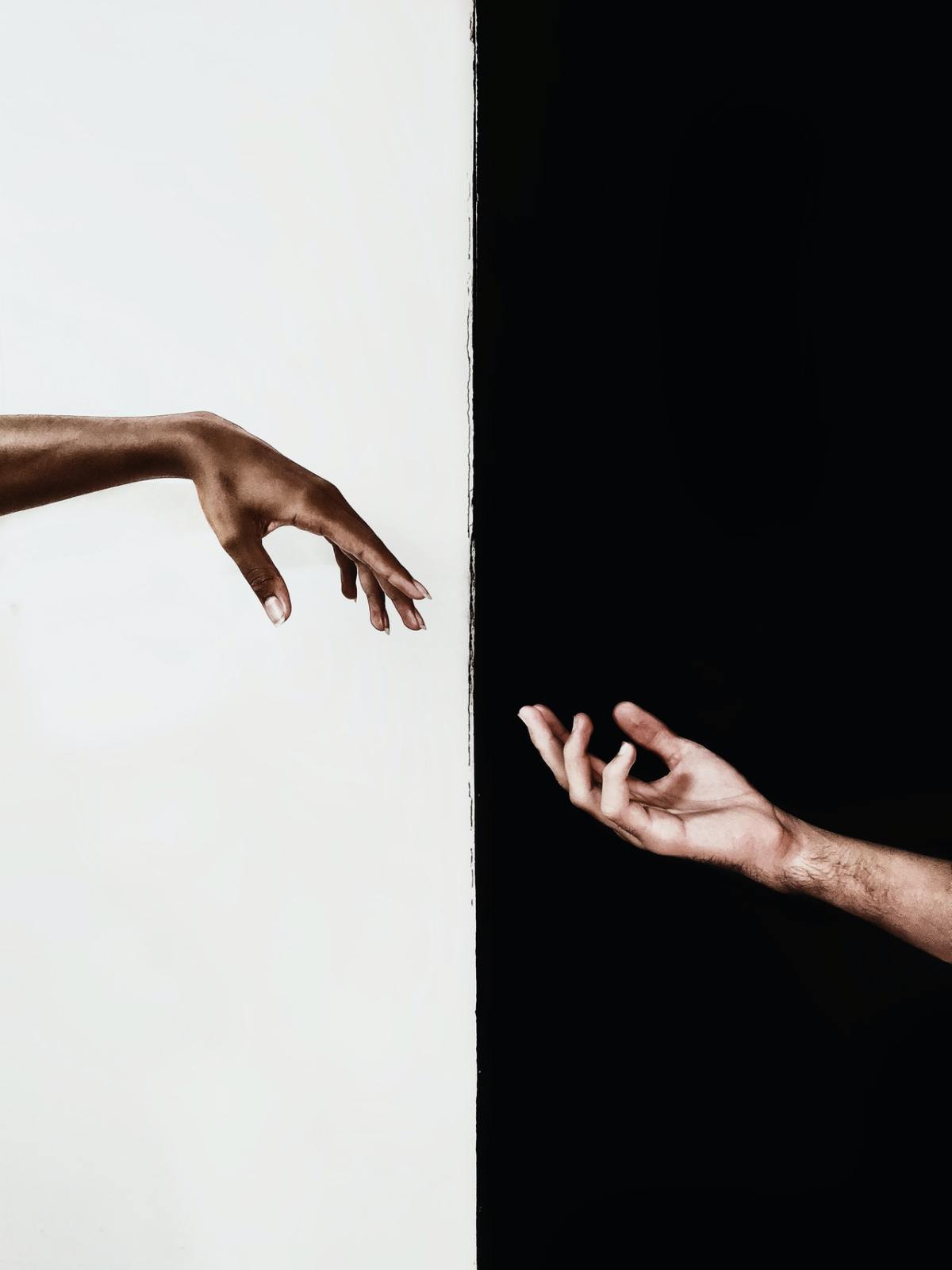
For the part of their journey that is here in Belgium, we are God’s hands, and then we send them on; they will stay in God’s hands and they will stay God’s children. We just do our part here. Sometimes we can send them on to God’s hands in the form of other Quakers. But we send them on as God’s children. 

It’s an important part of my Quaker faith to bring God’s hands here to people who need it and just to know that it is good enough. That’s all I can do. I can’t follow them. I can’t protect them, I can’t guarantee them success. I have to release them back into those hands that brought them here. 

In the same way, I think it is also important to remember that our loved ones who are suffering from fear and grief are also God’s children. They may be lent to us, but they are ultimately God’s. We channel God’s love to them, and then let them go. 

It is required we do awake our faith – our faith that we will find the resources we need: financial, physical, spiritual, personal. That we will find the people who can help with the work when we need them, and that we will have the support we need to help our loved ones on to the next part of their journey. 

That we will be able to follow Jesus in the work he began: love one another.