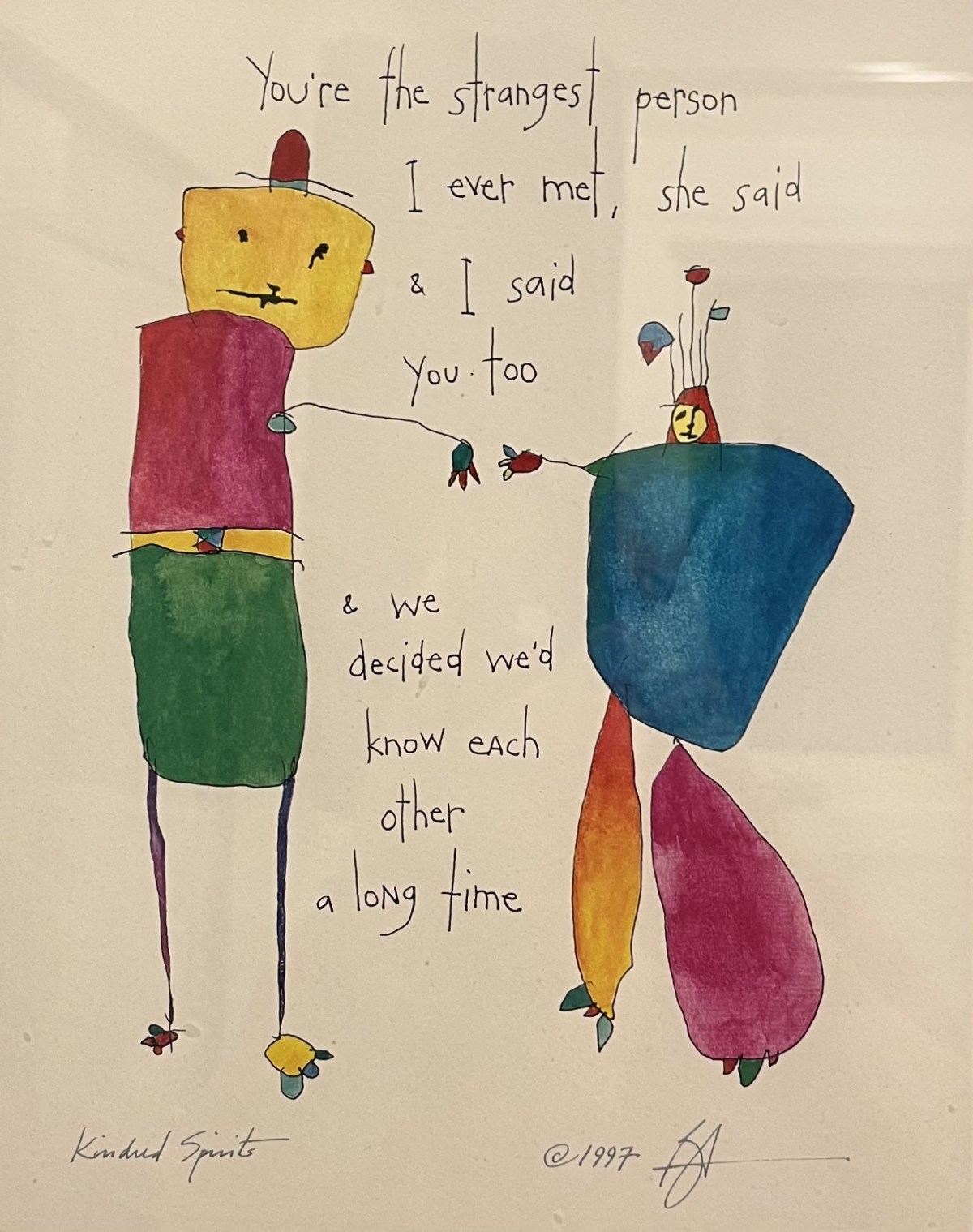
The Grace of Love

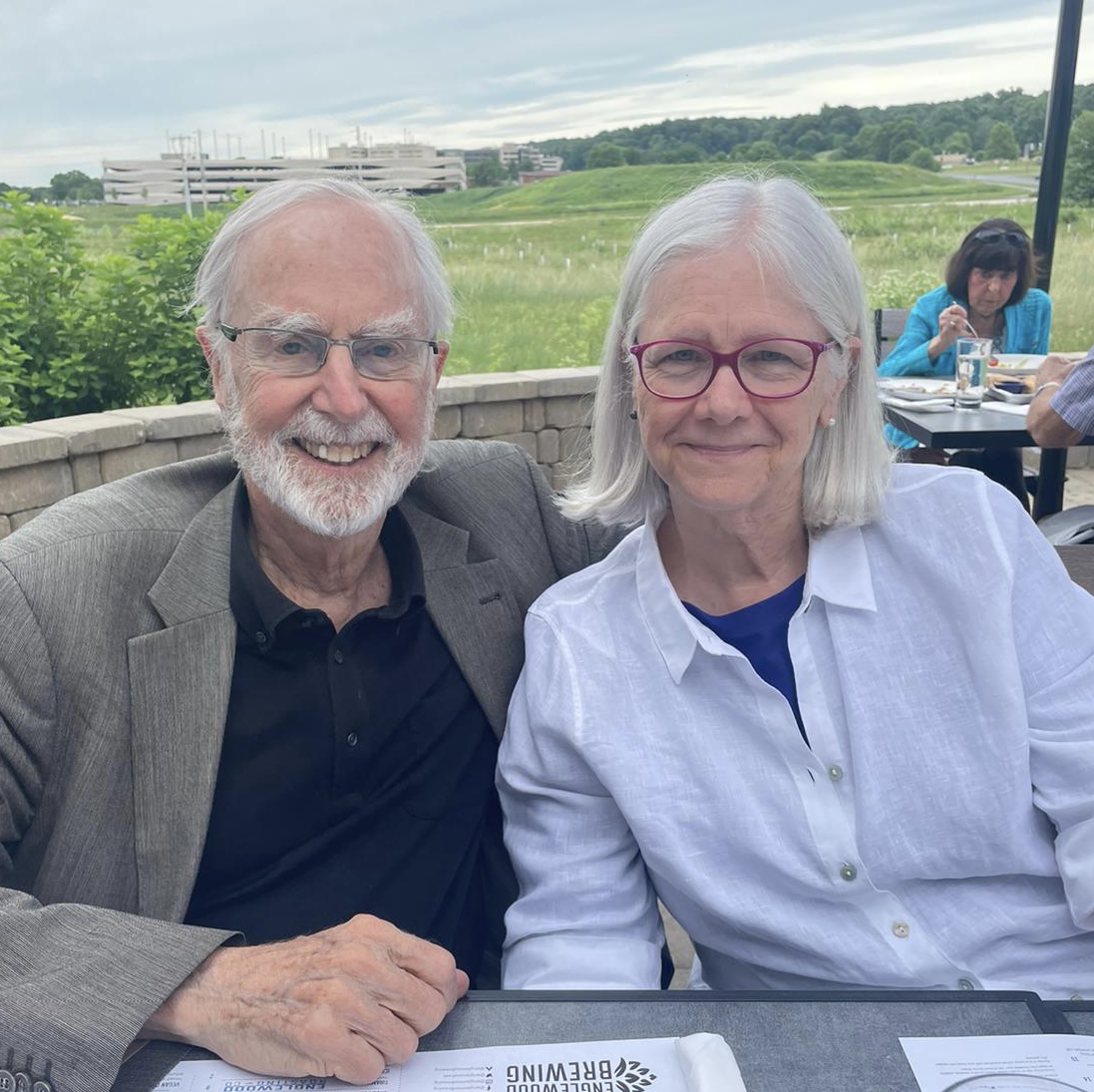
I have lived for 34 years in the grace of my husband’s love. It’s unconditional but it still took me a long time to count on it. I believe that my husband has always loved me – not always my actions, but always ME. I don’t have to change to have that love, but having that love makes me want to change, to do better, to be my best self. 

My husband Dan was the first person I had ever known who loved me with all my faults. Not in spite of my them, not because of my them, but simply with them. Just as I am. Or as I was. As I have been over these many years, because during 34 years of living in the grace of that love I have been able to change and let go of patterns of behavior that don’t serve me or others. 

That love stands as a mirror, reflecting back to me the best of me and because of that I have become a better person. I count on that love, never more than when I have not been my best self, and when I need the reassurance that I can find that best self again. The safe harbor of Dan’s love lets me love my worst self until I can find my best self. Or at least my better self. 

Knowing that the harbor of that love is always there I am not as afraid to confront my darker side, to examine my faults fearlessly, to understand them and what triggers them. It’s the safety of that love that enables me to accept and grow away from my darker side. It holds space for me to be broken and to heal. 

It took me a long time to see that God also loves me just as I am. I recently read of someone who was feeling burned out, oppressed by the weight of her work and the state of the world today. She decided to spend two days in a retreat and checked herself in to a retreat center, where she was assigned a spiritual advisor. She expected to be given exercises to do which would ensure her spiritual cleansing, her return to the light of the love of God. Instead, she was told to spend the two days living in the knowledge that God loves her now, apart from anything that she does.  

This is how love has changed me. First, the knowledge of my husband’s love and then the knowledge of God’s love. 

I now try to live each day in the knowledge of God’s love, in the knowledge that I don’t have to change to be worthy of that love. When I can do that, I am able to work to become the best version of me that is possible. Not to earn that love, but because of it. 

The best analogy that I can find for this is being in a boat. Not knowing that I am loved is like having leaks in my boat. If the boat is leaky I have to spend all of my time bailing the boat out (ie, trying to be lovable), and have no ability to row or steer it. My boat is at the mercy of the environment around me. When I know that I am loved the boat loses its leaks and I can spend time rowing and steering it toward where I am meant to be. 

We don’t have to change in order for God to love us. God loves us in order for us to change. Living in the knowledge of that love, with the foundation of that love, allows us to become our best selves. 
Food as love

As I examine my journey with food, love is the thread that holds it together.

Recently I saw a challenge to write our journey with food. It wasn’t directed at me and I wasn’t sure exactly what it meant, but I decided to try anyway. 

I grew up in a culture famed for its hospitality. If ‘they’ loved you, they cooked for you. If you loved ‘them’, you ate their food. So during large parts of my life food meant the outward proof of the love of others. But that love wasn’t without conditions – to act, to BE as others saw me, as others wanted me to be. 

Falling short, as we inevitably do, meant using food to comfort myself. Thus began an unhealthy relationship with food – where food represented the love that I did not find in my life for a long time. And if I loved someone I cooked for them. They did not all eat my food. 

When love entered my life, I was busy. I was working all the hours God sent and still using food as a substitute for the real thing. Slowly, over time, I was able to accept the love offered and to trust it, to count on it. 

For several years, I cooked for a series of diplomatic lunches whose discussions focused on human rights and peace. The food was different from most working lunches. It was all homemade, handmade. In designing the menus we thought about how it would be eaten: sitting down, standing while holding a plate, etc. We also thought about the mood we wanted to create with the food: not only the homey ambiance, but also the neurotransmitters that would be produced by the different ingredients. We wanted a sense of wellbeing, of goodwill that comes from endorphins or serotonin or dopamine. We used ingredients designed to produce these. 

At one of these, the participants spent three days discussing migration. We decided to feature foods that had migrated so successfully that they are now associated with their adopted homeland: potatoes and Ireland, tomatoes and Italy, tea and Britain, etc. The final lunch, the centerpiece of our migrated dishes, was something that is synonymous with the city of New Orleans: Gumbo. Gumbo, it turns out, is the word in several African languages for okra. 

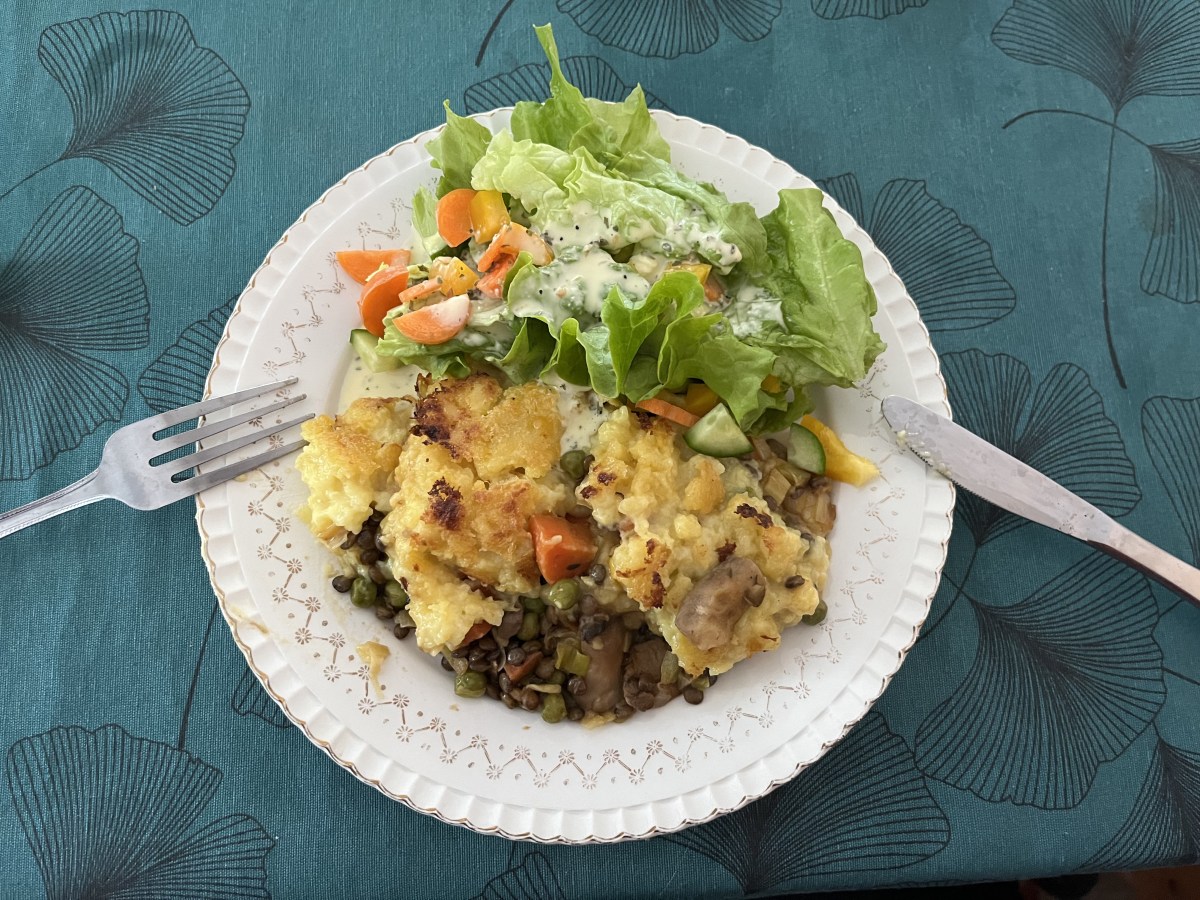
When I cook for others, I spend time building layers of flavor, using the best ingredients I can find. Sometimes a dish can take several days: a three-day gumbo is so much better than one made in an afternoon. I have been told that it’s possible to taste the love in my food. I think that’s because of the layers of flavor that are built into it. That takes time and good ingredients. Love, then, is time: time to find the ingredients, time to prepare them, time to cook them with care and (yes) with love. 

During the pandemic I cooked for people who were in the process of migrating, looking for a safe place to build their lives. This food was probably the most important that I have ever made. It needed to be nutritious, filling, and most of all, full of love. Sometimes it was all that a person might eat in a day. It needed to feed their body, but also their soul. They needed to know that someone cared enough to put love into their food.  It might have been their only food that day; it might also have been their only human contact. It had to be good. 

So as I examine my journey with food, love is the thread that holds it together. It began as an expression of love for me, then it evolved into an expression of my love for myself, and now it’s my way of showing love for others. Underneath it all is the human emotion of love, of connection. 

The Gift of Imperfection

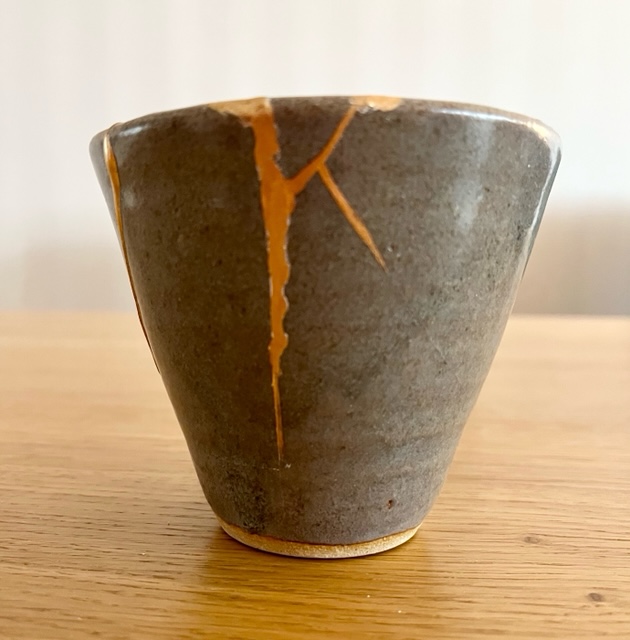
We are all imperfect. But we are perfectly suited to the work we are called to do.

I sometimes think about a quote attributed to Michelangelo, when asked how he could sculpt a leaf that looks so real. “You just cut away all the parts that don’t look like a leaf”. 

In a sense, we all sculpt ourselves. When we let go of all the parts that don’t really fit us, we discover who we really are. It’s sometimes difficult to let go of the image of ourselves that we have tried so hard to create. Often this is an image of perfection, but accepting our imperfection is an important part of discovering our true selves. The mistakes we make along the way are part of this process.

How often do we say, “If I’d known then what I know now, I would have done things differently.” And yet, if we had done things differently, we would not know what we know now. We would not be who we are now. We only know what we know now because of those mistakes. Without them, we would be a different person. 

When we realize that we are imperfect, when we fully accept that, we can begin to know ourselves. When we can do that, we can understand what we are called to do.

What if our weaknesses, our weird-nesses, were an important part of our ability to do the work we are called to do? 

Our weirdnesses can help us to carry the burden of our calling. I think of a local Friend, who can be vastly annoying when they want something, but who has been able to do amazing work in their community precisely because they do not accept “no” for an answer. In my work with anti-racism, the ability and willingness to be impolite and confrontational is sometimes needed to call out micro (or macro) aggressions. Or to speak truth to power. 

We are all imperfect. But we are perfectly suited to the work we are called to do. Does this mean that we don’t have to try to be our best selves? I don’t think so. There is a difference between wanting to be better and wanting to be perfect. 

It’s interesting to note that the word perfect originally did not mean “without flaws”. It meant “complete”. It is from the Latin per facere, to make complete. Something that is perfect is complete. When we are imperfect, we are incomplete. And it’s this incomplete-ness that means that we need others to complete us. This is the drive for community, for connection with others. 

Understanding this enables (or even requires) us to connect to other people in order to be perfect – in order to be complete. Understanding ourselves, warts and all, helps us understand what we bring to our ministry, and what we need to call on others to do. 

When we understand ourselves, we can carve our own leaves – cut away the parts we have tried to be that aren’t really us, and “sink down to the seed that God planted in us”. We can do what we have been admonished to do: love our neighbor as ourselves: as our true selves, not as we want to be seen, not as we hope that we are, not as others see us, nor as we are afraid we are. But as our true selves. This is liberating. 

A Simple Faith in a Complicated World

News!

Oh, wow. I’ve written a book! And now it has a publication date: 28 July 2023. That’s a long way off, but it will be available for pre-order before that, and a few review copies can be had even before that. If you’d like to write a review, please let me know and we’ll see if we can snag one of those.

Watch this space!

William Penn and White Fragility

We have always known that William Penn was an enslaver. The only new fact is that we didn’t care until recently. 

Friends House London, the headquarters of Quakers in the UK, recently renamed the William Penn room in favor of Benjamin Lay, an abolitionist Quaker. The controversy around renaming this room has produced many arguments for and against. One of the common arguments against the renaming is that we are rewriting history. But history is intact – there are no new historical facts here. We have always known that William Penn was an enslaver. The only new fact is that we didn’t care until recently. 

As Friends, with a testimony to equality and a promise to be anti-racist, we naturally feel some guilt about the fact that we have long revered someone who was an enslaver. It’s hard to accept that we as individuals are imperfect, flawed. I believe that this unease creates the sort of cognitive dissonance we are seeing in the current discussion. 

Cognitive dissonance is the mental discomfort that results when our actions conflict with our values. For example, we might feel cognitive dissonance if we drive a car while campaigning for climate change. In the current case, the dissonance comes from our belief that racism is wrong and that we are good people. This doesn’t square with the fact that some of our actions as well as some of the actions of William Penn, who we admire, were racist. The cognitive dissonance we feel in the context of racism has a separate name: white fragility. 

I believe that the action on our part that is creating the dissonance is the fact that we didn’t care that Penn was an enslaver.  It’s not the historical fact of Penn’s enslavement of people that is the problem for us, but the newly acknowledged fact that we didn’t care until now. It’s not about Penn and the customs of his time; the custom of our time demands that we bring enslaving into the light. And that forces us to acknowledge that until now we didn’t care. 

How much of the emotion around this issue comes from white fragility and the fact that our failure to notice points to our own racism?

Viewed through this lens, the arguments about renaming rooms or buildings or taking down statues can be understood as efforts to reduce the guilt we feel: if it’s ok to leave the rooms or the buildings or the statues, then it’s ok not to notice that these are racist. Then we are not obliged to notice that we ourselves are racist. 

Perhaps another way to reduce the dissonance is to recognize that it is caused by the reverence we want to feel for someone who is fundamentally flawed. There are two ways we might reduce this dissonance. First, we might remember and accept that we are all flawed, that we can simultaneously do good things and bad things, and that our heroes always have feet of clay. In this way we can live with William Penn’s racism and perhaps begin to live with our own. 

Secondly, we might question the need to revere other people in the context of our testimony of equality. Perhaps instead of celebrating individuals it would be better to celebrate the actions that let their lives speak, knowing that these come from flawed humans. Examples of those actions might be creating a space for religious freedom, fighting enslavement, working for equal rights for women and children, working for climate justice and racial justice. The list is long.  

Then perhaps we can let go of the distraction of naming rooms, buildings and statues and begin the hard work of understanding our own racism. When we can bear to look at that, we may find ourselves needing to know more about white fragility and the structural racism that has benefitted us as white people. 

When we are formed in a racist society, it’s not our fault if we are racist. However, it IS our fault if we choose to stay racist. 

Photo by Kelly I on Pexels

The Cult of Perfection

It’s time to give up the cult/illusion of perfection, which keeps us from achieving our spiritual potential.

We are told that master carpet weavers purposely introduce an error in their pattern because only God is perfect, and to weave a perfect carpet would be an affront to God. 

So much to unpack here. The first thing is the problematic reasoning that says that only God is perfect, and so I have to be sure to be imperfect. This totally ignores the fact that if the first is true the second is not necessary. If only God is perfect, why do I need to be sure to make something imperfect? COULD I make something perfectly if I am not God? Presumably not. 

So why do we have to go out of our way to make something imperfect? Is there not a kind of hubris, a sort of spiritual showing off that requires us to wear our peity as a shining garment of forced imperfection? 

Then there is the question of why God would need for us to be sure to not be perfect. Is God that jealous? It seems to me to be a form of pettiness that is very human and not Godlike at all. We continue to imagine God in human form, with our own imperfections. Which means that the God we imagine cannot be perfect after all. 

But for me there is a deeper question. Given that we are created imperfect, what if God sometimes needs for us to be perfect? What if one day we have this amazing gift to have a perfect day or to do one thing absolutely perfectly? In the context of our imperfection, one shining example of perfection would be such a gift. Why would we intentionally foul it? Why would we want to not accept it? What does this mean for our relationship with God, with the world? 

What happens to perfect people? Do we really know any? Perhaps a better question is what happens to the ones who are most like Jesus, who try to bring the love of God to the world by working for equality and justice and (e.g.) civil rights? What happens to the ones whose work threatens the power structures of the world? MLK, Rosa Luxemburg, Gandhi. 

And yet none of these were perfect. We hear stories about our heroes that illuminate their feet of clay. That prove to us that they were not perfect. Often the response to this is to withdraw respect for them and their work. Why are we so reluctant to admire someone who has faults? What if we could understand that they did this amazing work in spite of these imperfections? That even with feet of clay they could practice the commandment that we love one another? 

Because if they could do their work without being perfect, perhaps we can too. Our imperfections, our feet of clay, should not prevent us from doing the work we are called to do. I believe that it is our imperfections which force us into relationship with others, which completes us. 

When my weakness is supplemented by another’s strength in the same area, we both become complete. To make this happen, we need to understand and accept (even appreciate) our own weaknesses as well as the strengths and weaknesses of others. When we can see how these complement each other we can do things together that neither of us could do alone. It’s only when our imperfections are completed by the gifts of others that we become complete. Not I, but we

It’s time to give up the cult/illusion of perfection, which keeps us from achieving our spiritual potential.