On Living

Come back when you have reflected on your faith and can speak to what it has meant to you as you traveled the path.

(This was written by my stepdaughter, Theresa Flynn)

Many many deep thoughts today. The time of year when people come to my door, cheery and fresh-faced, urging me to accept their particular version of religion.

I don’t dislike them for their proselytization. But I take exception with their youth. Here’s the thing. In many places of the world those who have lived a certain number of years are respected for their lived experience. America is somewhat unique in its adulation of youth. 

I know there are people who tell these young folk of faith to “have sex” before they speak on life choices. That’s crude and crass, but it’s not entirely wrong. Sex is part of love and love is something impossible to describe to someone who has never loved and is also unique to each person’s experience.

Here is what I would say to these missionaries, if I could: 

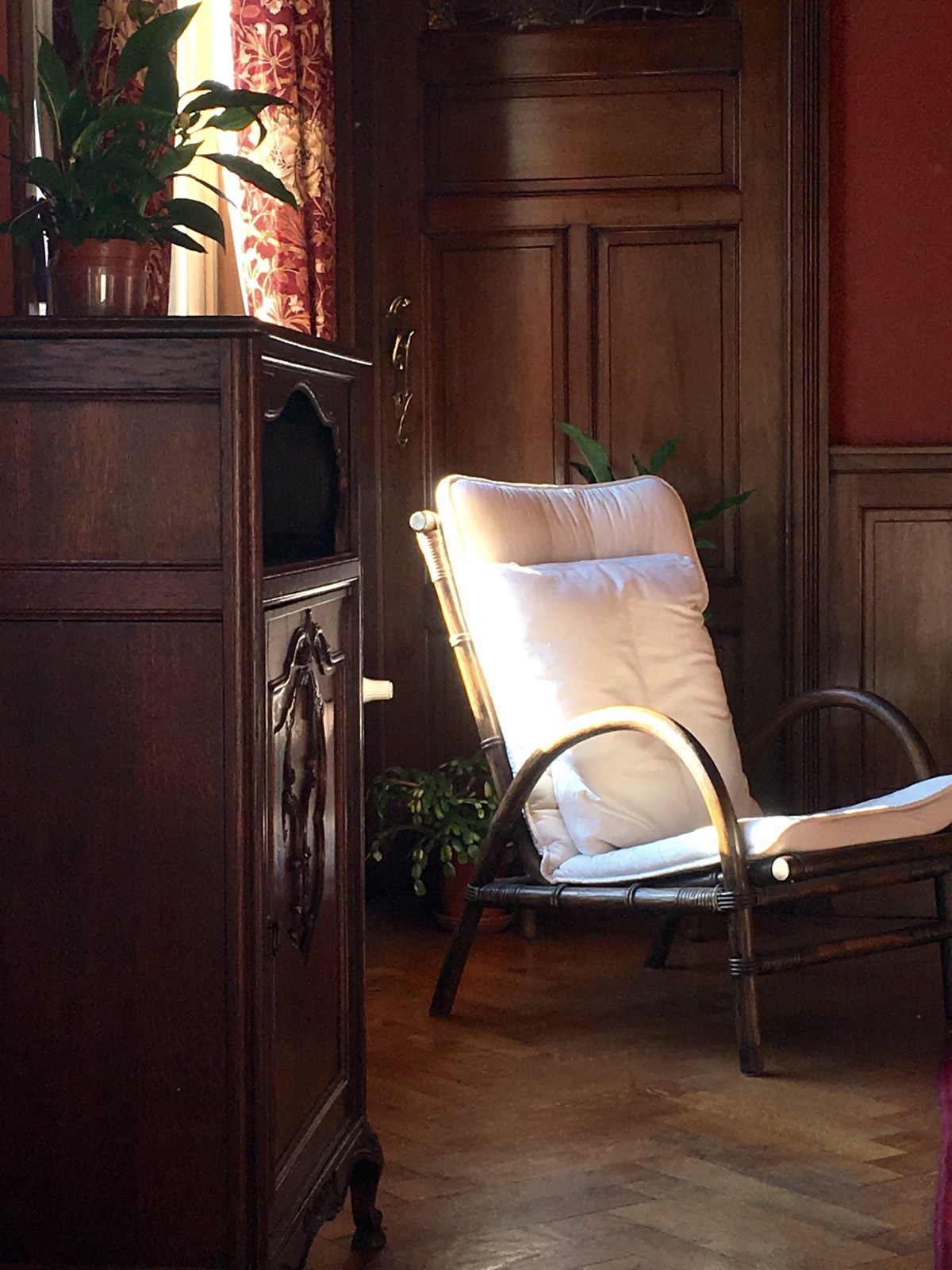
Come back to me when you have lived. Come back when you have loved in a way that has ripped you in two. When you have lost love, when you have despaired, unable to see the light. Come back when you have lived a life – something which never turns out the way you think it will and brings surprises beyond imagining. Come back when you have experienced struggle and heart-wrenching ache, when you have been gifted by joy you never saw coming. Come back when you are old. And you sit in a chair watching dawn on a cold December day, drinking tea, reflecting on your life. It wasn’t what you expected – was it what you wanted? Was it fulfilling? Can you look back with the confidence that it is a life well-lived? Come back when you are old enough to know that there are many things you can still do, but there are no longer limitless possibilities for the direction of your life. Come back when you have reflected on your faith and can speak to what it has meant to you as you traveled the path.

Yesterday was a day when my second cousin, a boy of 19 and a new father, was memorialized. It is an unimaginable loss which will forever touch the lives of those he left behind. As a part of the grief, of losing who he was, is the loss of possibility. We live our lives in the possibility of what may come. For him, all that “could be” is gone. What of his daughter? She will never know him. What will he be to her? A photo? A story? A regret? A loss? Will he be a ghost who only sometimes haunts the corners of her life, someone she doesn’t think about much … until she turns 20 and realizes her father never saw that age. How will her mother, her grandfather, all of his family, deal with this loss? Does the grief weave its way into their lives in quiet ways, or rip a jagged hole which never fades?

This is what I mean. That life is unpredictable. A person is there. And then they are not. You live a long life and wonder what it all means. Why is one person given grace and another struggle? A set of beliefs which brings structure and peace and solace to one person rings hollow to another. We do not know, and will never know, what tomorrow will bring. 

To the young people who want me to buy into their faith, I say – strap in. This is life. And you have none of the control you think you do. The most you can hope for is to be part of the ride.
Describing the Indescribable

Quakers have many words for the divine: God, spirit, Goddess, light, life, good. Describing what we feel connected to in our Quaker meetings is not easy

Quakers have many words for the divine: God, spirit, Goddess, light, life, good. Describing what we feel connected to in our Quaker meetings is not easy – in my case it doesn’t fit any of the descriptions of the divine that I heard as a child, nor many that I have heard as an adult. Nonetheless, I use the word God. I understand the spirit behind all of the words that are used. The words do not define the experience we have, they only describe it or point to it. 

I know that some Friends do not want to hear some of these words used. There are those who do not want to hear the word God, for example. Others insist on Christian language.

Many years ago, as a professor of psychology, I used to teach my students about Maslow, Freud, Skinner, Tinbergen, Pavlov, Erikson, Jung, and others. Each of these theorists brought a unique point of view to their understanding of human behavior. My students used to ask which of these theories is correct. The answer is that they are all correct, but they are incomplete. They all result from the discipline and thought of the formulator who was looking at human behavior (visible and invisible, exterior and interior) through their own unique lens. Each brought a part of the truth. The more views we have, the better we understand the subject. 

I think it’s like that with Quakers describing the connection that we feel in Meeting for Worship I have no traditional Quaker words for the deep connection that I feel to something that I cannot describe. The closest I can come is to use the words I was taught as a child – the God words. But others have other points of reference, other lenses through which to view and describe this experience that unifies us as Quakers. Sometimes the words others use may trigger old memories or feelings in us – but that’s for us to manage. I believe that we can give the person using those words the grace of letting them use the words that they feel comfortable with and ask for that same grace for ourselves. We none of us have words that can absolutely, correctly, completely capture the power of that connection. 

I love the fact that Quakerism is large enough to hold all of our various diverse experiences in Meeting for Worship as well as all of the various diverse backgrounds that we bring to it.  I love that Quakerism is large enough to encapsulate all the ways in which we worship. Large enough for the conservative Friends who embrace plain dress and plain speech, for those Friends whose pastors program their worship sessions, for those of us in the calm stillness of unprogrammed worship, and even for the joyous, lively singing and dancing in worship among our Evangelical Friends. 

I hope that this can extend to embracing the many and wonderful ways in which we describe whatever it is that we engage with in Meeting for Worship. Words automatically limit what we describe, and these words can only point to something bigger than all of them. No description of our experience is perfect. It is at best an approximation, incomplete. 

Until we have new words, we are limited to the old ones in trying to describe the indescribable. All of these words are correct, but they are incomplete.

Each of us has a particular experience of God and each must find the way to be true to it. When words are strange or disturbing to you, try to sense where they come from and what has nourished the lives of others. (Quaker Faith and Practice of Britain Yearly Meeting – Advices and Queries #17)

Photo credit to Pixabay

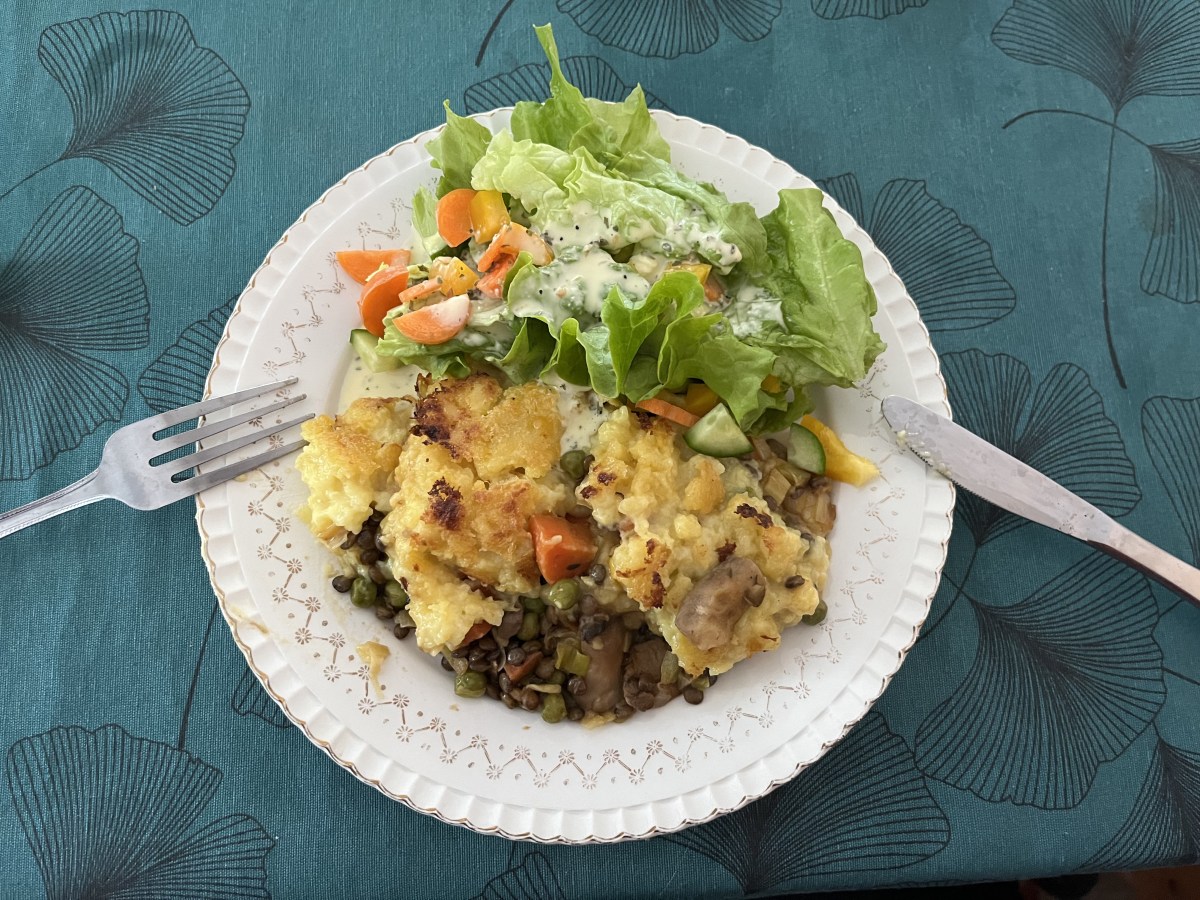
Food as love

As I examine my journey with food, love is the thread that holds it together.

Recently I saw a challenge to write our journey with food. It wasn’t directed at me and I wasn’t sure exactly what it meant, but I decided to try anyway. 

I grew up in a culture famed for its hospitality. If ‘they’ loved you, they cooked for you. If you loved ‘them’, you ate their food. So during large parts of my life food meant the outward proof of the love of others. But that love wasn’t without conditions – to act, to BE as others saw me, as others wanted me to be. 

Falling short, as we inevitably do, meant using food to comfort myself. Thus began an unhealthy relationship with food – where food represented the love that I did not find in my life for a long time. And if I loved someone I cooked for them. They did not all eat my food. 

When love entered my life, I was busy. I was working all the hours God sent and still using food as a substitute for the real thing. Slowly, over time, I was able to accept the love offered and to trust it, to count on it. 

For several years, I cooked for a series of diplomatic lunches whose discussions focused on human rights and peace. The food was different from most working lunches. It was all homemade, handmade. In designing the menus we thought about how it would be eaten: sitting down, standing while holding a plate, etc. We also thought about the mood we wanted to create with the food: not only the homey ambiance, but also the neurotransmitters that would be produced by the different ingredients. We wanted a sense of wellbeing, of goodwill that comes from endorphins or serotonin or dopamine. We used ingredients designed to produce these. 

At one of these, the participants spent three days discussing migration. We decided to feature foods that had migrated so successfully that they are now associated with their adopted homeland: potatoes and Ireland, tomatoes and Italy, tea and Britain, etc. The final lunch, the centerpiece of our migrated dishes, was something that is synonymous with the city of New Orleans: Gumbo. Gumbo, it turns out, is the word in several African languages for okra. 

When I cook for others, I spend time building layers of flavor, using the best ingredients I can find. Sometimes a dish can take several days: a three-day gumbo is so much better than one made in an afternoon. I have been told that it’s possible to taste the love in my food. I think that’s because of the layers of flavor that are built into it. That takes time and good ingredients. Love, then, is time: time to find the ingredients, time to prepare them, time to cook them with care and (yes) with love. 

During the pandemic I cooked for people who were in the process of migrating, looking for a safe place to build their lives. This food was probably the most important that I have ever made. It needed to be nutritious, filling, and most of all, full of love. Sometimes it was all that a person might eat in a day. It needed to feed their body, but also their soul. They needed to know that someone cared enough to put love into their food.  It might have been their only food that day; it might also have been their only human contact. It had to be good. 

So as I examine my journey with food, love is the thread that holds it together. It began as an expression of love for me, then it evolved into an expression of my love for myself, and now it’s my way of showing love for others. Underneath it all is the human emotion of love, of connection. 

Today

Today’s the day

Some days make it all worthwhile. They make up for all the frustration and problems on the other days. They make us forget the pain and heartache that other days bring. Today is one of those days. 

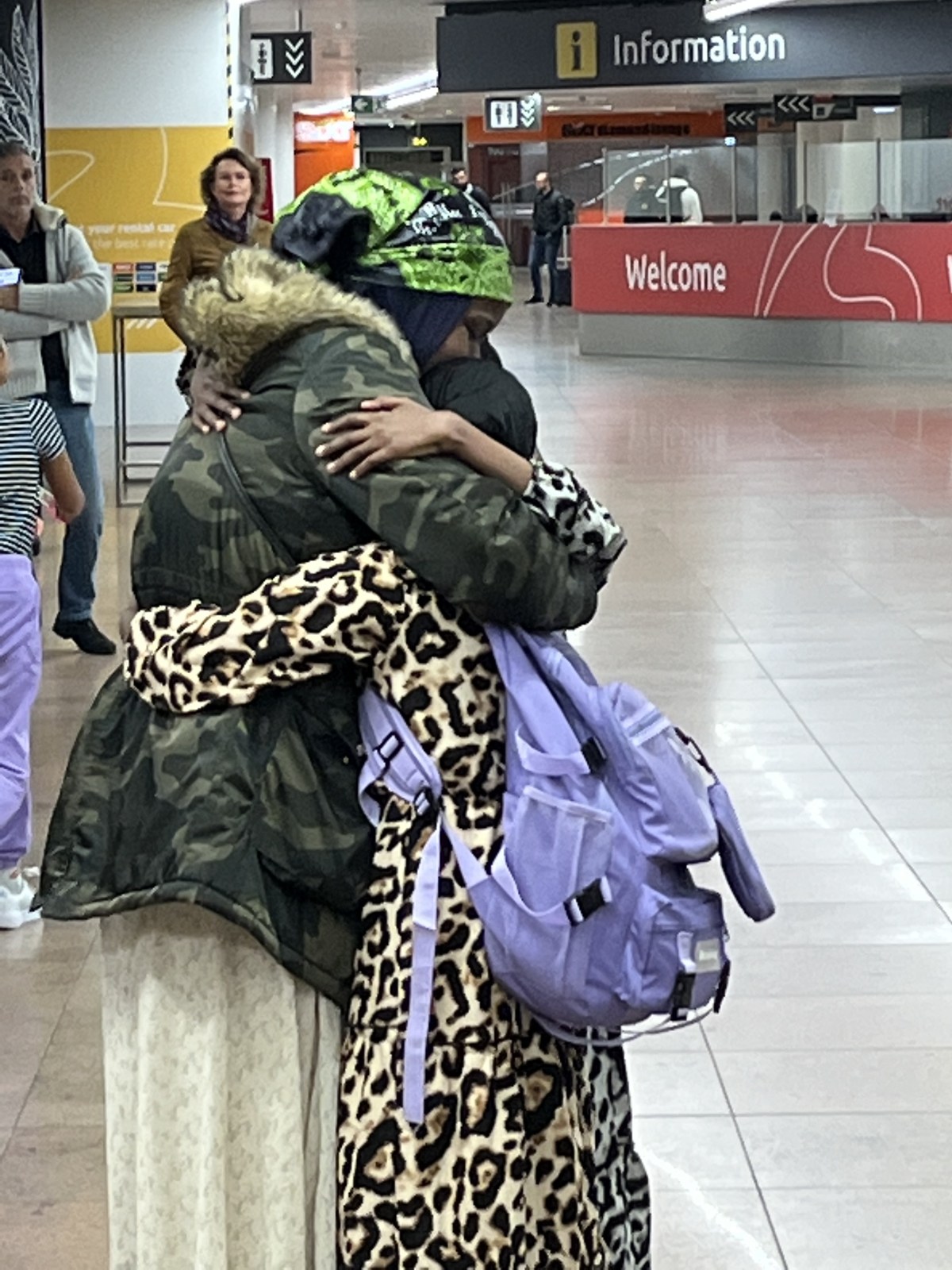
Today. It’s a day that has been much anticipated. My friend, who had to flee her homeland and leave her children behind, has had many of the difficult days. This is not one of them.

Today. It’s a day full of trains and planes, transport questions and logistics. Today is a day that my friend thought would never come.

Today. On the difficult days, my friend talked to her children on WhatsApp. She watched them grow up and form memories that didn’t include her.

Today. As she struggled to make a place for herself in Belgium and to be able to bring her children here, she found amazing reserves of resilience and resourcefulness. But some days she doubted that today would ever come. 

Today. It’s a day that has been scheduled and postponed; it has been planned and those plans canceled. The frustration around it is immense.

Today. It’s a day when two little girls will get to see their mother and hug her and smell her and feel her breath on their cheeks for the first time in almost half their lives.

Today. It’s a day that a mother gets to hold her children and touch them and smell them and feel their tears on her cheek for the first time in almost half their lives. 

Today. It’s the day that the girls get to tell their mom about the adventure they’ve had: airplanes, trains, automobiles, new people new languages new countries.

Today. There will be a lot of tears shed here today. That’s OK.

Today. Today is the day this miracle happens, and I get to be a witness.

Today’s the day.

William Penn and White Fragility

We have always known that William Penn was an enslaver. The only new fact is that we didn’t care until recently. 

Friends House London, the headquarters of Quakers in the UK, recently renamed the William Penn room in favor of Benjamin Lay, an abolitionist Quaker. The controversy around renaming this room has produced many arguments for and against. One of the common arguments against the renaming is that we are rewriting history. But history is intact – there are no new historical facts here. We have always known that William Penn was an enslaver. The only new fact is that we didn’t care until recently. 

As Friends, with a testimony to equality and a promise to be anti-racist, we naturally feel some guilt about the fact that we have long revered someone who was an enslaver. It’s hard to accept that we as individuals are imperfect, flawed. I believe that this unease creates the sort of cognitive dissonance we are seeing in the current discussion. 

Cognitive dissonance is the mental discomfort that results when our actions conflict with our values. For example, we might feel cognitive dissonance if we drive a car while campaigning for climate change. In the current case, the dissonance comes from our belief that racism is wrong and that we are good people. This doesn’t square with the fact that some of our actions as well as some of the actions of William Penn, who we admire, were racist. The cognitive dissonance we feel in the context of racism has a separate name: white fragility. 

I believe that the action on our part that is creating the dissonance is the fact that we didn’t care that Penn was an enslaver.  It’s not the historical fact of Penn’s enslavement of people that is the problem for us, but the newly acknowledged fact that we didn’t care until now. It’s not about Penn and the customs of his time; the custom of our time demands that we bring enslaving into the light. And that forces us to acknowledge that until now we didn’t care. 

How much of the emotion around this issue comes from white fragility and the fact that our failure to notice points to our own racism?

Viewed through this lens, the arguments about renaming rooms or buildings or taking down statues can be understood as efforts to reduce the guilt we feel: if it’s ok to leave the rooms or the buildings or the statues, then it’s ok not to notice that these are racist. Then we are not obliged to notice that we ourselves are racist. 

Perhaps another way to reduce the dissonance is to recognize that it is caused by the reverence we want to feel for someone who is fundamentally flawed. There are two ways we might reduce this dissonance. First, we might remember and accept that we are all flawed, that we can simultaneously do good things and bad things, and that our heroes always have feet of clay. In this way we can live with William Penn’s racism and perhaps begin to live with our own. 

Secondly, we might question the need to revere other people in the context of our testimony of equality. Perhaps instead of celebrating individuals it would be better to celebrate the actions that let their lives speak, knowing that these come from flawed humans. Examples of those actions might be creating a space for religious freedom, fighting enslavement, working for equal rights for women and children, working for climate justice and racial justice. The list is long.  

Then perhaps we can let go of the distraction of naming rooms, buildings and statues and begin the hard work of understanding our own racism. When we can bear to look at that, we may find ourselves needing to know more about white fragility and the structural racism that has benefitted us as white people. 

When we are formed in a racist society, it’s not our fault if we are racist. However, it IS our fault if we choose to stay racist. 

Photo by Kelly I on Pexels

On Being Happy

Someone once told me that there’s a difference between wanting to be happy and choosing to be happy. One of them is an action.

I have just received an email canceling plans for a lunch date which I have been looking forward to. When I look beyond my disappointment, I am reminded that we often don’t recognize the gifts that are given to us, because they don’t come in the form we want or expect. Sometimes they come in a different wrapping and so we leave them unopened and unacknowledged. For me, these canceled plans give me the opportunity to spend the day with my husband reading and writing  – a gift I hadn’t expected. 

There is a wonderful phrase in French: “être bien dans sa peau”, which means to be good in one’s skin. It means simply to be comfortable with life. This, I think, is what it means to be happy: to walk cheerfully over the world, knowing that we have a place, and to be at peace with the world and with others. I believe that this is our natural state, and that we often block it with fears and resentments and conflict. 

We have everything we need to be happy in this life. How do we do it then? How do we find the gifts in the everyday? How do we remove the blocks to being “good in our skin”? 

I once had a friend who was always in a good mood, no matter what was going on. She had the gift of finding humor and laughter in whatever life threw at her. I asked her how she did it, and she told me that she had survived a terminal illness several years before I met her. “I’m not supposed to be here”, she said, “every day is a gift.” How can we find that attitude? Do we have to almost die to be happy? 

As I look at the people in my life who are truly happy, it’s not the ones who have the most or the ones who have the easiest lives. It’s often the ones who have the least and who have been through ordeals that I don’t know if I could survive who have found the key to being good in their skin. . 

Someone once told me that there’s a difference between wanting to be happy and choosing to be happy. One of them is an action. Seems easy enough, but it’s not. I can’t hold my breath and ‘be happy’. It takes some work. 

First I have to let go of some things: 

  • Expectations/entitlement
  • Judgment
  • Comparing myself to others
  • Jealousy
  • The need to be special
  • Perfectionism
  • Toxic relationships.

These are all things that separate me from other people, isolating me in my tiny mind – truly a bad neighborhood. 

Then I have to find some things: 

  • acceptance – I stop fighting what I can’t change
  • connection: to self, to God, to others. It is the connection to others that I have missed in Covid times. 
  • joy – which flows from the feeling of connection,

Then I have to give some things away:

  • Love – In order to have it you have to give it away
  • Things/possessions/money
  • Time – the span of my life is measured in time. I give it away by ‘spending’ it making the world a little better for others. Or maybe just making my small corner of it better. Letting my life speak. 

It’s not an easy path to walk. It gets narrower and narrower as we go along. Once we set our feet on it we are drawn along trying not to be distracted by the side-turnings. Often I fail. But sometimes, just sometimes, it works. 

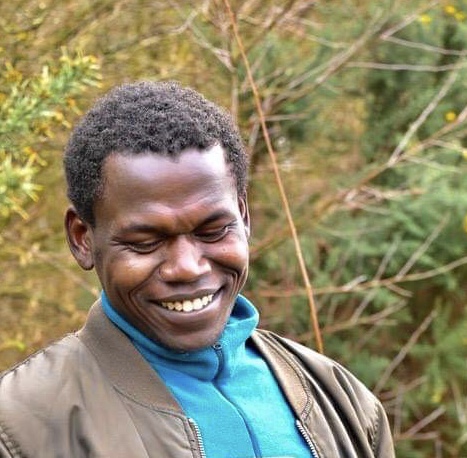
Photo by Goppang Nyarta

Welcoming the Stranger

Like many Friends I have been struggling with how to help with the influx of refugees from Ukraine. My particular struggle is with the fact that these are being welcomed very differently from others.

I find myself outraged by the overt racism in the journalistic coverage. I am frustrated by the sudden willingness of governments to open their borders to white Europeans when they have been closed to brown and black people fleeing the same devastation. 

In the UK for example, Eurostar will give free tickets to Ukrainians going to the UK, and the UK government is offering 350 pounds a month to host Ukrainians. When the refugees were Syrian, potential hosts were required to raise thousands of pounds under the community sponsorship programs, and their air transport was arranged by the UNHCR. When the refugees are African, their transport is small boats across the Channel. They are housed in abandoned hotels and barracks for months and sometimes years before their asylum claims are processed. 

I have not joined the vigils for Ukraine. I keep asking “where are those same vigils for Syria? Afghanistan? Palestine? Yemen? Darfur? South Sudan?” I find myself judging those who are only now willing to help rather than being happy that there are so many. 

But Ukrainians also need support and welcoming the stranger is holy work. How can I support Ukrainians without supporting the racism behind their different welcome? How can I answer the call to welcome the stranger without taking away from the work that I am already doing with displaced people from Africa? 

Maybe I can help by supporting those who are new to this work. I can pass on what I have learned about supporting people who have lost their homes and their families. 

So here’s some of what I have learned, in no particular order:

  • Respect the dignity of people who have no possessions left. This is not their whole life – it’s a difficult part that is not finished yet. 
  • Nobody wants to be somebody else’s project. Don’t insist on doing things that people can do for themselves. Give them agency wherever possible.
  • Listen when someone wants to talk, but remember that no one owes you their story. This is an important boundary to respect. 
  • Try to find games to play that don’t require vocabulary. Twister and Jenga are good fun.
  • Cook with them, not for them, to the extent possible. Sharing food is an essential human interaction. Let them show you their food and through that, their culture. It will be different from yours. 
  • Learn a few words in Ukrainian. Teach them your language. 
  • Find ways that they can give back to you without being your servant. For example, someone with a little English can translate for someone who has none. 
  • Ask them what they need, but also watch. Not everyone is good at articulating their needs or willing to ask for help. 
  • Don’t look for gratitude or smiles. They will feel pressure to be grateful, but also resentment that they are in this position. Let them mourn the life they had. 
  • God’s hands brought them to you and for the time being you are the hands that God has to help them. When it’s time, you will release them back into God’s hands.
  • Build a community to help you in this work. Find others around you who are doing this too and share your experiences with them. Learn from theirs.  
  • Above all, take good care of yourself. You will begin to feel some of the trauma that they are experiencing. Find a way to shed that. They need you whole. 
  • Be prepared to be changed and enriched by this experience.

Photo by Ahmed akacha from Pexels

The Cult of Perfection

It’s time to give up the cult/illusion of perfection, which keeps us from achieving our spiritual potential.

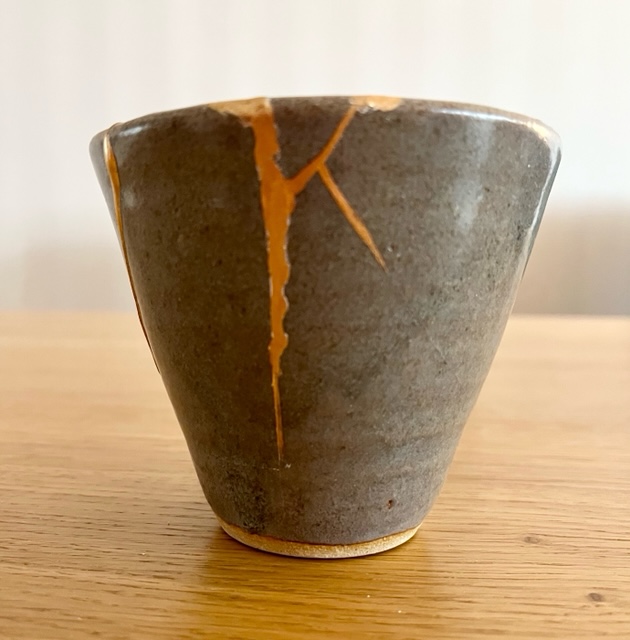
We are told that master carpet weavers purposely introduce an error in their pattern because only God is perfect, and to weave a perfect carpet would be an affront to God. 

So much to unpack here. The first thing is the problematic reasoning that says that only God is perfect, and so I have to be sure to be imperfect. This totally ignores the fact that if the first is true the second is not necessary. If only God is perfect, why do I need to be sure to make something imperfect? COULD I make something perfectly if I am not God? Presumably not. 

So why do we have to go out of our way to make something imperfect? Is there not a kind of hubris, a sort of spiritual showing off that requires us to wear our peity as a shining garment of forced imperfection? 

Then there is the question of why God would need for us to be sure to not be perfect. Is God that jealous? It seems to me to be a form of pettiness that is very human and not Godlike at all. We continue to imagine God in human form, with our own imperfections. Which means that the God we imagine cannot be perfect after all. 

But for me there is a deeper question. Given that we are created imperfect, what if God sometimes needs for us to be perfect? What if one day we have this amazing gift to have a perfect day or to do one thing absolutely perfectly? In the context of our imperfection, one shining example of perfection would be such a gift. Why would we intentionally foul it? Why would we want to not accept it? What does this mean for our relationship with God, with the world? 

What happens to perfect people? Do we really know any? Perhaps a better question is what happens to the ones who are most like Jesus, who try to bring the love of God to the world by working for equality and justice and (e.g.) civil rights? What happens to the ones whose work threatens the power structures of the world? MLK, Rosa Luxemburg, Gandhi. 

And yet none of these were perfect. We hear stories about our heroes that illuminate their feet of clay. That prove to us that they were not perfect. Often the response to this is to withdraw respect for them and their work. Why are we so reluctant to admire someone who has faults? What if we could understand that they did this amazing work in spite of these imperfections? That even with feet of clay they could practice the commandment that we love one another? 

Because if they could do their work without being perfect, perhaps we can too. Our imperfections, our feet of clay, should not prevent us from doing the work we are called to do. I believe that it is our imperfections which force us into relationship with others, which completes us. 

When my weakness is supplemented by another’s strength in the same area, we both become complete. To make this happen, we need to understand and accept (even appreciate) our own weaknesses as well as the strengths and weaknesses of others. When we can see how these complement each other we can do things together that neither of us could do alone. It’s only when our imperfections are completed by the gifts of others that we become complete. Not I, but we

It’s time to give up the cult/illusion of perfection, which keeps us from achieving our spiritual potential. 

Practicing Equality

We do not have ‘degrees’ of Quakerliness. The Quaker way is more complicated and more subtle.

I often hear the phrase “weighty Quaker”. When I was new to Quakers, I thought this was something to aspire to. It seemed to convey the idea that this was someone in whose voice I would hear Truth, that this was someone who practiced our values thoroughly. 

As time has given me more experience with Quakers as human beings, however, I understand that this is sometimes used to convey that one among us is ‘more equal’ than the others and that their voice should be heard more loudly. It’s often evoked to give more authority to the speaker, as if they were holders of a Truth that we could only access through them. But the Quaker way tells us that we can all access Truth through our connection to the Divine, and our testimony of equality tells us that none of us has special access to this Truth. 

Similarly, I often hear that something or someone is ‘unquakerly’. As a new Quaker, I wanted to avoid this at all costs. I used to ask what it meant, but could not find a satisfying or even a consistent answer. As my experience with this phrase and those who use it has grown, I have come to understand that it often simply means that the speaker doesn’t like something but has no other argument against it. 

I have recently heard another phrase along these same lines: “a Quaker’s Quaker”, meant to convey the idea that this person is perfectly Quaker, and should not be doubted. That what they say must be accepted as Truth, and any other points of view ignored. Sort of the Quaker version of speaking ex cathedra

This makes me think about a Quaker career path: seeker, attender, member, weighty Quaker, Quaker’s Quaker. And this makes my heart hurt. We do not have ‘degrees’ of Quakerliness. We are not Freemasons. 

Instead, the Quaker way is more complicated and more subtle. We are all sometimes speakers of Truth, and we are all sometimes caught up in pride and ego and fear and willfulness which block our access to the divine. It is true that some Friends seem to understand how to avoid this block more often than others, but as soon as we label them as ‘weighty’, we can almost guarantee that the path will be blocked for them. 

As with all pedestals, it’s often others who place us there. When we place one Friend above another, we give them false value, and then we become disillusioned when they cannot live up to our unrealistic expectations. It’s important to remember that our testimony of equality is also about humility, and when we wrap ourselves in Quaker values and judge others as unquakerly, we put ourselves on a pedestal above them. The fall from a pedestal is a long one.  

We hear about Quaker values: peace, truth, equality, simplicity, community, stewardship. We do not have to be Quaker to work for Quaker values. We should remember that we do not own these values, nor do we have a monopoly on them. Sometimes the lives of non-Quakers speak these values louder than the lives of ‘weighty’ Quakers. Or Quaker’s Quakers. 

What if we end this separation of Friends into degrees of worthiness and try to treat each other as equal? Let’s think about dropping these labels, stop judging each other’s worthiness, and begin to weigh each others’ words against the Truth we find in worship. Let’s embrace our testimony to equality and try to listen for Truth in the voices of all Friends and friends. 

Photo by cottonbro from Pexels

A Rule to Live By

My Friend Ken Orchard was inspired by the Rule of St. Benedict, written in 516 as a series of precepts to guide the life of monks living together. Ken has written his own Rule as a guide for his life. When I first heard it read it touched my heart as ministry.  He has allowed me to publish it here.

  • Open your heart, mind and soul to the divine energy for every hour of every day. Live faithfully to your sacred potential. Make the divine energy central to you and in you and be true to it in all that you do. 
  • Surrender yourself to the divine energy without reservation and put the divine will even before your own. 
  • Total commitment brings change. Little by little or vast area by vast area let your life be transmuted in the life of the divine energy.
  • The basis of simplicity is centring on the divine energy. The heart of the monastic life is to live always in the presence of that energy. 
  • Offer yourself as a place of prayer. Enter silence joyfully. May your presence be one that heals divisions and expands hearts. 
  • Celebrate embodiment. All of creation is a manifestation of the divine energy. Worship it with unparalleled commitment and a complete love that is without self-interest. Work to make the holy manifest. 
  • Refrain from possession. Love expands the spirit, possession contracts it.
  • Treat all religions and spiritual paths, and those who follow them, with honour and respect. 
  • Seek the company of those who will deepen your spirituality and support your journey.
  • Create community wherever you are. Make of your heart a home for the homeless, a refuge for the poor. 
  • Be simple, honest and authentic. Welcome humility and vulnerability into your life. Express your gratitudes and appreciations openly.
  • Surrender yourself to the true glorifying of the divine energy.